
When a pump turns off, gravity will naturally try to pull the column of liquid in the vertical pipe back down into the pump.
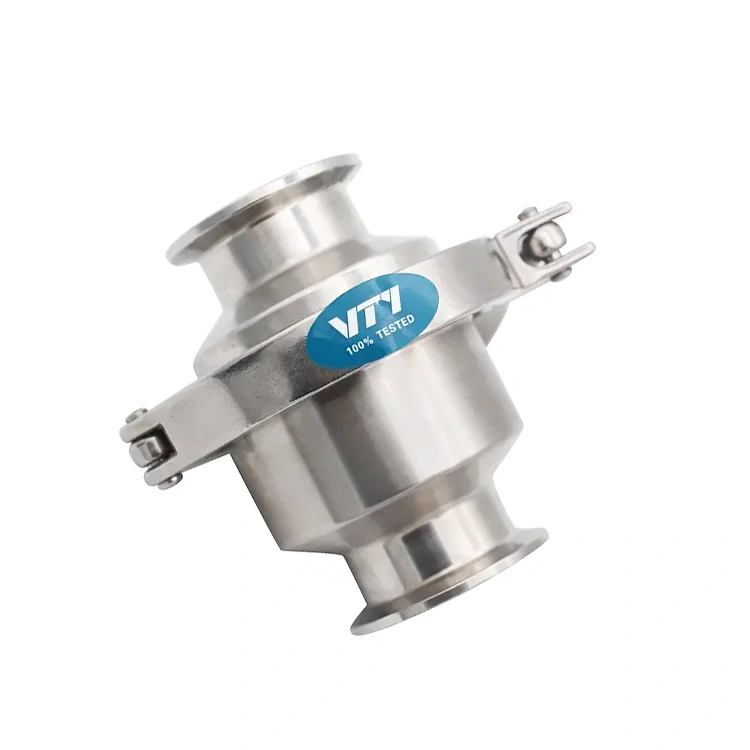
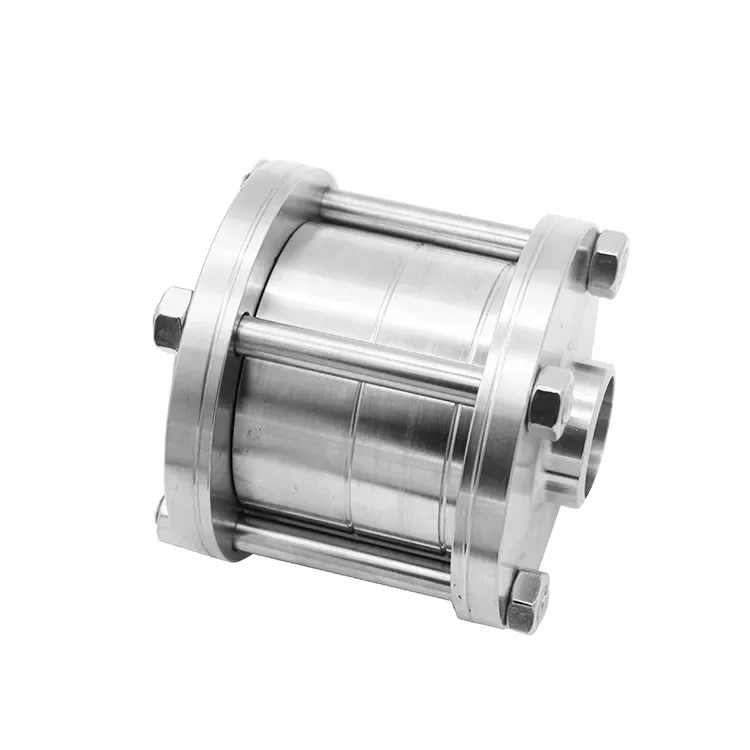
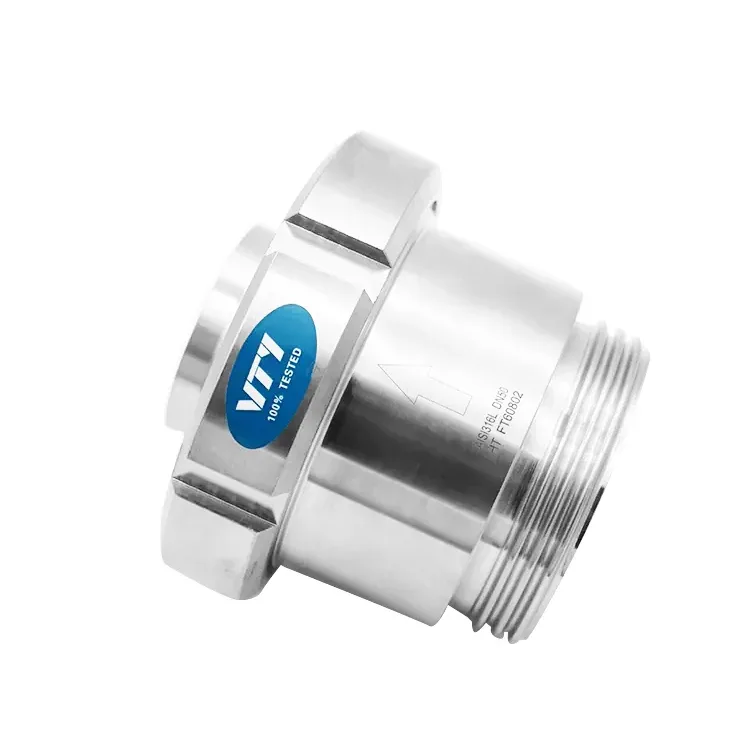
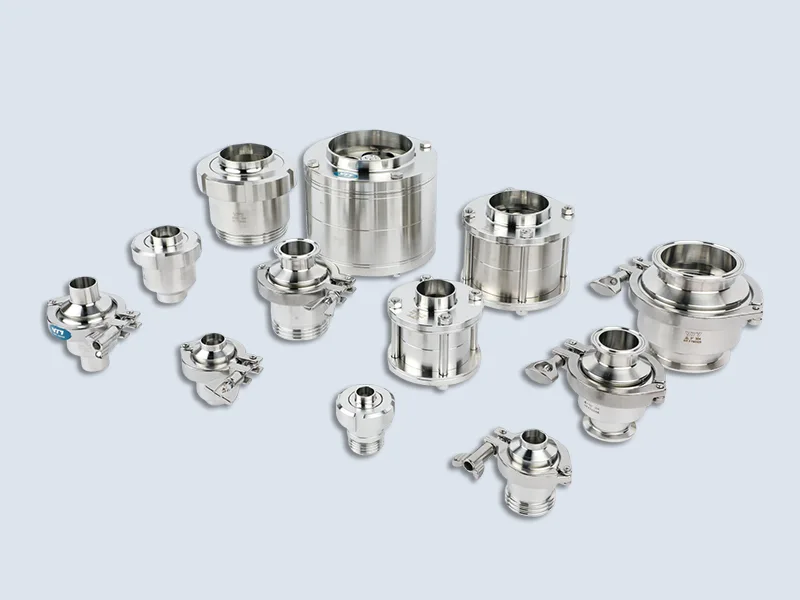
The Application: Placing a sanitary Check Valve immediately after the pump discharge prevents this backward rush of fluid.
Why it matters: It stops the pump from spinning backward (which can destroy the motor) and keeps the line "primed" (filled with fluid) so the pump can restart smoothly without dry-running or causing a sudden fluid pressure spike (water hammer).
Applications
Pump Protection and Priming
Pasteurized vs. Raw Milk Separation (Dairy)
In the dairy industry, raw milk must be pasteurized to kill pathogens. Once milk is pasteurized, it absolutely cannot come into contact with raw milk.
The Application: Check valves are placed on the lines downstream of the pasteurizer heat exchanger.
Why it matters: If a pump fails or pressure drops suddenly, the check valve instantly prevents freshly pasteurized milk from siphoning back into the unpasteurized side of the plant.
The Application: Check valves are placed on the lines downstream of the pasteurizer heat exchanger.
Why it matters: If a pump fails or pressure drops suddenly, the check valve instantly prevents freshly pasteurized milk from siphoning back into the unpasteurized side of the plant.
Preventing Cross-Contamination in CIP Systems
Clean-in-Place (CIP) systems pump aggressive cleaning chemicals and water through the same lines used for food or pharmaceuticals.
The Application: Sanitary Check Valve are installed on the chemical dosing lines where concentrated caustics or acids feed into the main water line.
Why it matters: They ensure that the water or product never pushes backward into the pure chemical storage tanks, and conversely, that chemicals don't bleed back into the clean water supply.
FAQ
1. How does TC fitting works?
Rather than using threads (which trap bacteria) or permanent welding, a Tri-Clamp connection uses two flanged pipe ends squeezed together against a smooth, interlocking rubber gasket. The entire joint is secured externally by a hinged metal clamp.
2. Why is TC fitting used?
It creates a perfectly smooth, crevice-free internal joint. Best of all, it allows maintenance teams to manually disassemble sections of processing lines for inspection or cleaning in seconds without tools.
3. To what standards do union type conform?
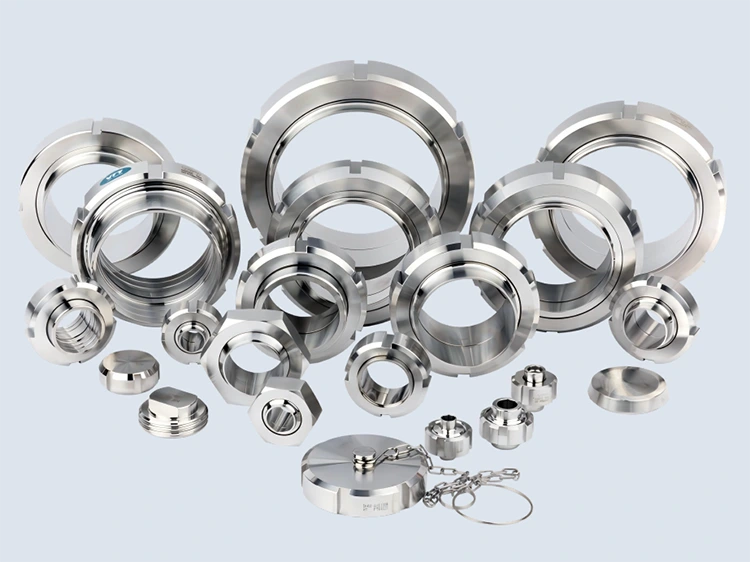
A. DIN 11851 (The German Standard) The most common union type in Europe. It features a round, slotted nut and a distinctive D-shaped profile gasket.
B. SMS 1145 (Swedish Milk Standard) Very common worldwide in dairy applications. It uses a lighter, squarer nut with fewer threads than DIN and a flat gasket.
C. RJT (Ring Joint Type / BS 4825) An older British standard still found heavily in the UK, Australia, and older Commonwealth plants. It uses a hex nut and an O-ring style layout.