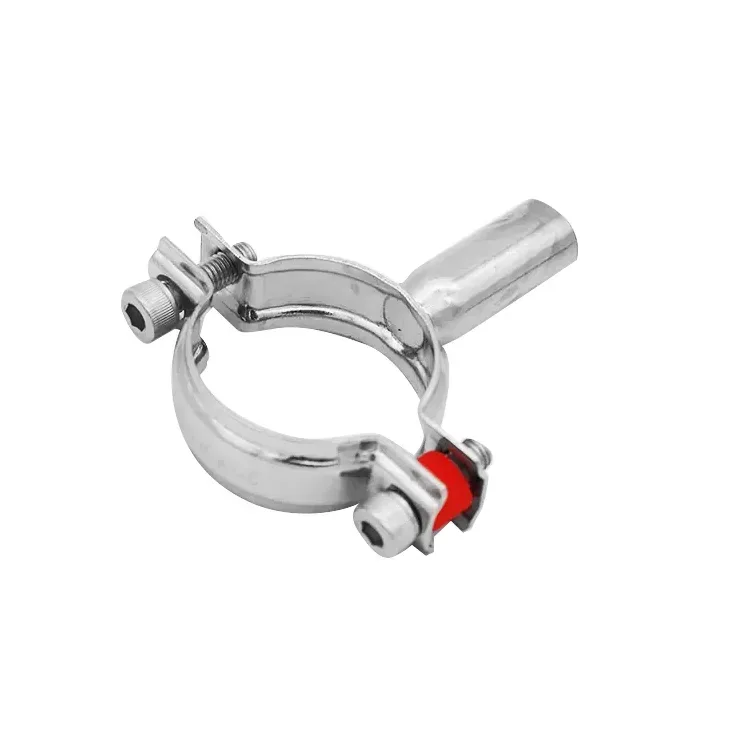
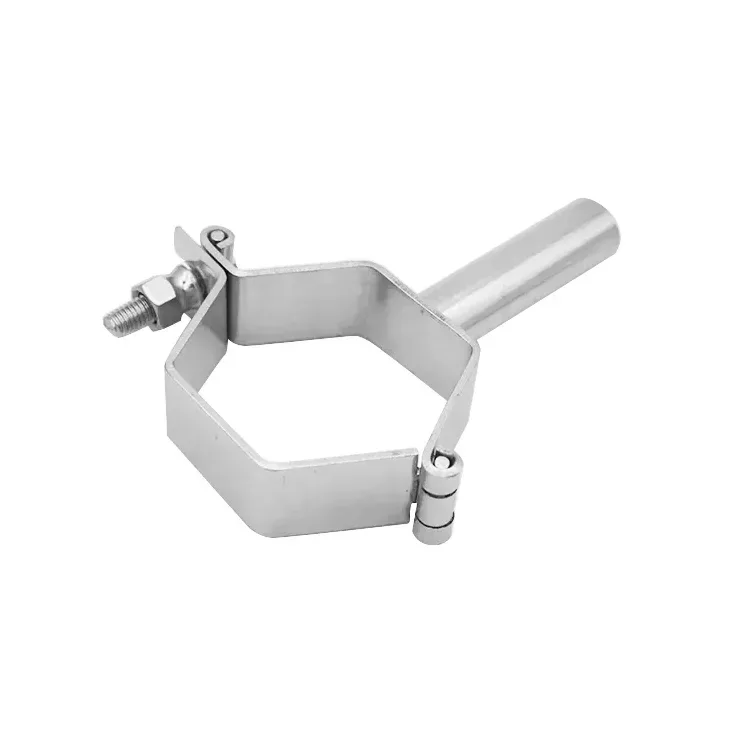
A sanitary tube holder (or tube hanger) is a specialized fixture used to secure and support stainless steel tubing in strict hygienic environments. Unlike standard industrial clamps, they are designed with smooth, crevice-free surfaces to eliminate areas where bacteria could harbor or accumulate.
A sanitary tube holder (or catheter securement device) works by anchoring medical tubing to the patient's skin without relying on traditional tape. It utilizes a hypoallergenic, skin-friendly adhesive base and adjustable straps or latches to hold the tube firmly in place. This prevents accidental pulling, reduces skin irritation, and minimizes trauma.
Our sanitary tube holders are manufactured by the following standards
1. How far apart should sanitary tube holders be spaced?
Spacing depends directly on your tube diameter and the weight of the fluid inside. If supports are placed too far apart, the lines will sag.
The Sagging Danger: In sanitary engineering, any sagging creates a permanent "low spot" where fluid collects and pools when the system is drained. This pooling breaks the gravity-drain design, creating a breeding ground for bacteria.
|
Tube OD Size
|
Maximum Support Distance (Horizontal)
|
|
0.5" to 0.75"
|
Every 4 to 5 feet (1.2 to 1.5 meters)
|
|
1.0" to 2.0"
|
Every 8 feet (2.4 meters)
|
|
2.5" to 4.0"
|
Every 10 feet (3.0 meters)
|
2. How do I prevent galvanic corrosion on my tube support grid?
Galvanic corrosion occurs when two dissimilar metals (like carbon steel and stainless steel) come into contact in a wet environment, causing the carbon steel to rust rapidly.
If your sanitary tube holders are attached to non-stainless steel ceiling structures or unpolished structural framing, always ensure there is an isolation pad, fiberglass strut spacer, or non-conductive plastic washer separating the hanger mount from the structural framework.
3. What is "Pipe Whip" and how do tube holders mitigate it?
Pipe whip refers to the violent, sudden movement of a pipeline caused by the rapid opening of automatic valves or transient pressure surges (water hammer).
In sanitary systems, positive displacement pumps create pulsating flow profiles. If your tube holders are spaced too far apart or lack vibration-dampening inserts, this pulsing can fatigue orbital weld joints over time. Placing high-damping, block-style polymer tube holders immediately before and after any heavy component (like automated valves or pumps) absorbs this dynamic energy.