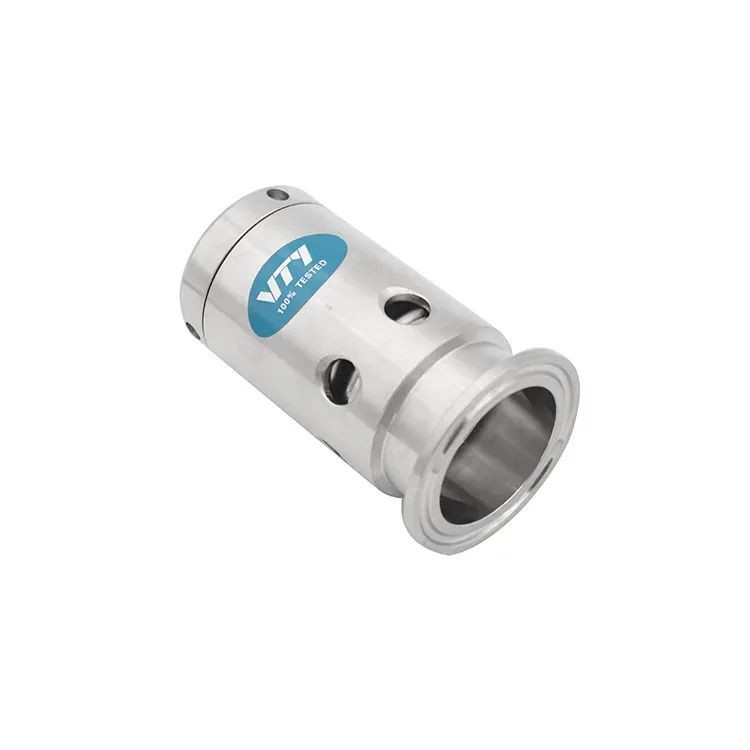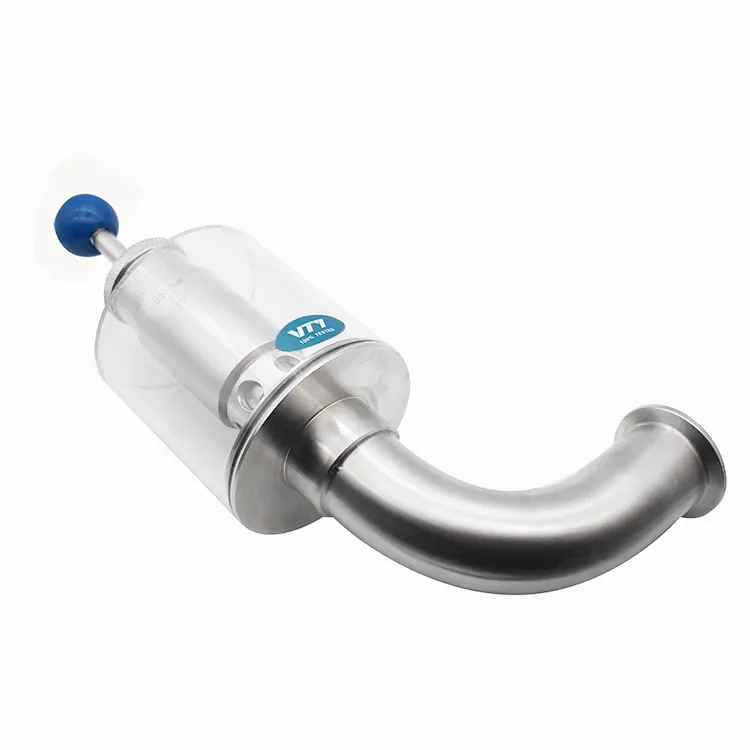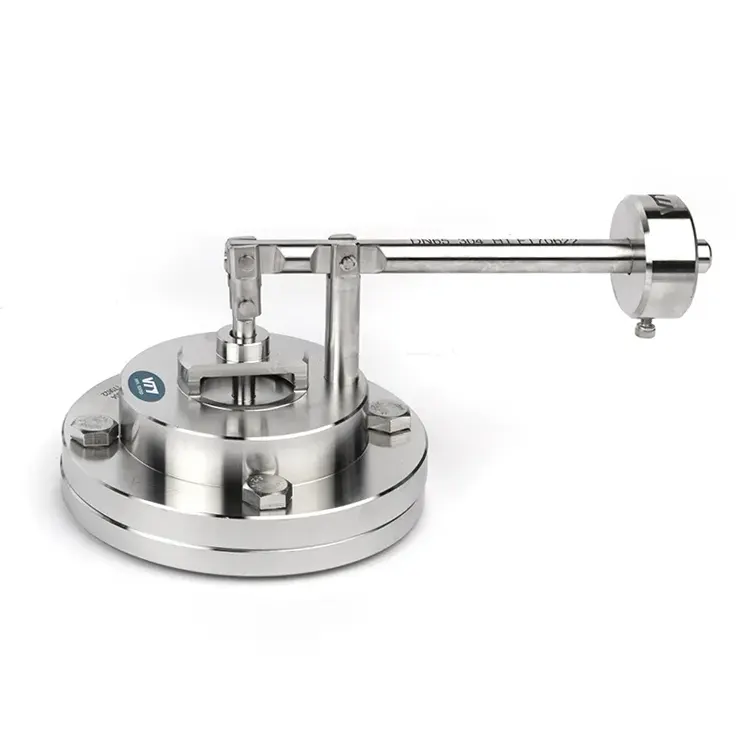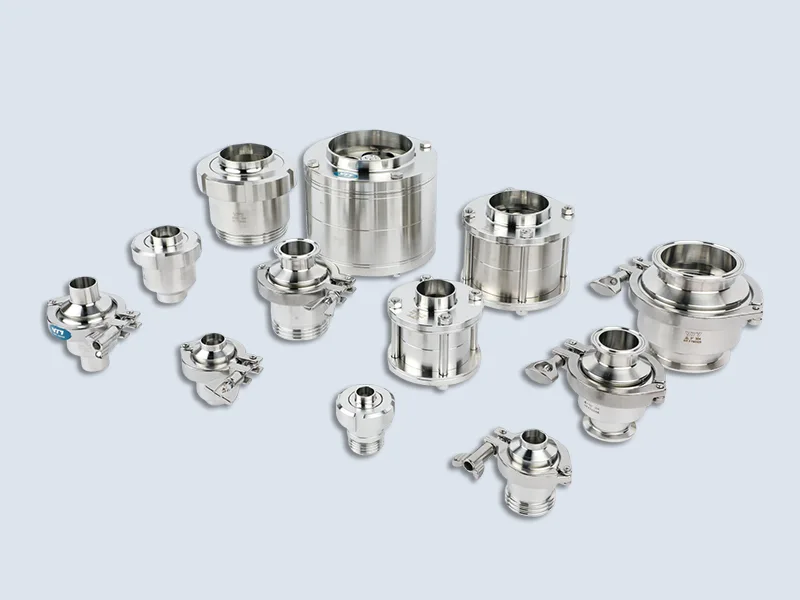

Pasteurization Lines: Protecting plates or tubular heat exchangers from bursting under unexpected pressure spikes during high-temperature milk treatment.
Carbonation & Bottling Systems: Relieving excess carbon dioxide (CO₂) pressure in soda, juice, or water blending systems to prevent catastrophic failure of filling manifolds.
Positive Displacement Pump Protection: Placed immediately downstream of lobe or paste pumps. If a downstream valve is accidentally closed while the pump is running, the safety valve cracks open to redirect flow, saving the pump from burning out.
Applications
❄️ Dairy, Food & Beverage Processing
🍷 Wine & Craft Brewing
Bright Beer & Fermentation Tanks: Safeguarding sealed tanks during active fermentation. If the gas exhaust lines block up with krausen (yeast foam), the safety valve vents gas to prevent the tank from bulging or exploding.
Gas Management Panels: Regulating and venting excess counter-pressure during automated keg washing and tank purging lines.
Gas Management Panels: Regulating and venting excess counter-pressure during automated keg washing and tank purging lines.
💊 Pharmaceuticals & Biotechnology
Bioreactors & Autoclaves: Relieving overpressure caused by steam sterilization (SIP) cycles or rapid gas injection while maintaining a completely aseptic internal barrier.
Aseptic Holding Tanks: Protecting vessels storing highly sensitive active ingredients or finished liquid medicines before they hit sterile filling lines.
Aseptic Holding Tanks: Protecting vessels storing highly sensitive active ingredients or finished liquid medicines before they hit sterile filling lines.
❄️ Liquid Cooling Industry
Data Center Cooling Infrastructure: Preventing pressure shocks within closed-loop liquid cooling manifolds that serve critical IT hardware. If a pump cycles aggressively or a loop section is isolated, the valve bleeds off thermal expansion pressure to prevent hazardous coolant leaks.
FAQ
1. Can sanitary safety valves be cleaned using CIP (Clean-In-Place) systems?
Yes, but they require specific design features to do so effectively. Because a safety valve is normally held closed by a heavy spring, the area behind the valve seat won't get cleaned during a normal CIP cycle.
To solve this, advanced sanitary safety valves come equipped with a pneumatic CIP lift actuator or a manual lifting lever. This mechanism mechanically cracks the valve open by 1–2 mm during the cleaning cycle, allowing CIP chemicals and water to thoroughly flush the seat area without changing the valve's pressure set point.
To solve this, advanced sanitary safety valves come equipped with a pneumatic CIP lift actuator or a manual lifting lever. This mechanism mechanically cracks the valve open by 1–2 mm during the cleaning cycle, allowing CIP chemicals and water to thoroughly flush the seat area without changing the valve's pressure set point.
2. How often should a sanitary safety valve be calibrated and tested?
In standard food, beverage, and brewery applications, safety valves should be visually inspected and manually pop-tested (using the lifting lever) every 6 to 12 months to ensure the seat isn't sticking.
For pharmaceutical, biotechnology, or high-pressure applications, strict regulatory bodies (like ASME BPE) typically require formal bench testing and recalibration at least once a year by a certified technician, with documentation kept on file.
For pharmaceutical, biotechnology, or high-pressure applications, strict regulatory bodies (like ASME BPE) typically require formal bench testing and recalibration at least once a year by a certified technician, with documentation kept on file.
3. What are the most common causes of a leaking safety valve?
If a sanitary safety valve is weeping or leaking, it is usually caused by one of three things:
• Debris on the Seat: A small particle of product, yeast residue, or a CIP chemical crystal has lodged between the valve plug and the seat, preventing a tight seal.
• Gasket Degradation: The elastomer seal (EPDM, PTFE, Viton) has worn out, hardened, or cracked due to repeated thermal shocks from steam sterilization (SIP).
• Operating Too Close to Set Pressure: If your system's normal operating pressure is at 90% or higher of the valve's set pressure, the valve may suffer from "seat chatter" or constant weeping. System pressure should ideally stay at least 10% below the valve's cracking pressure.