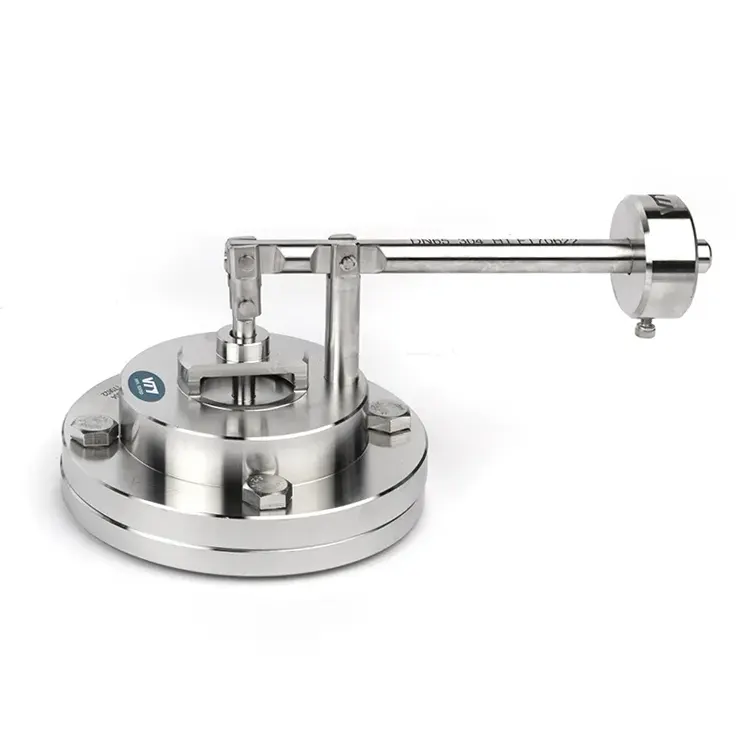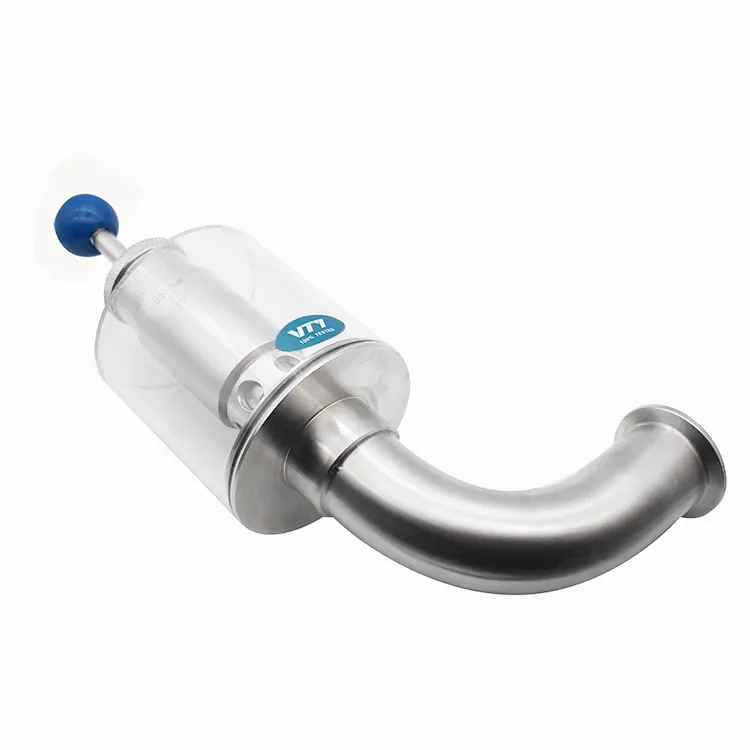

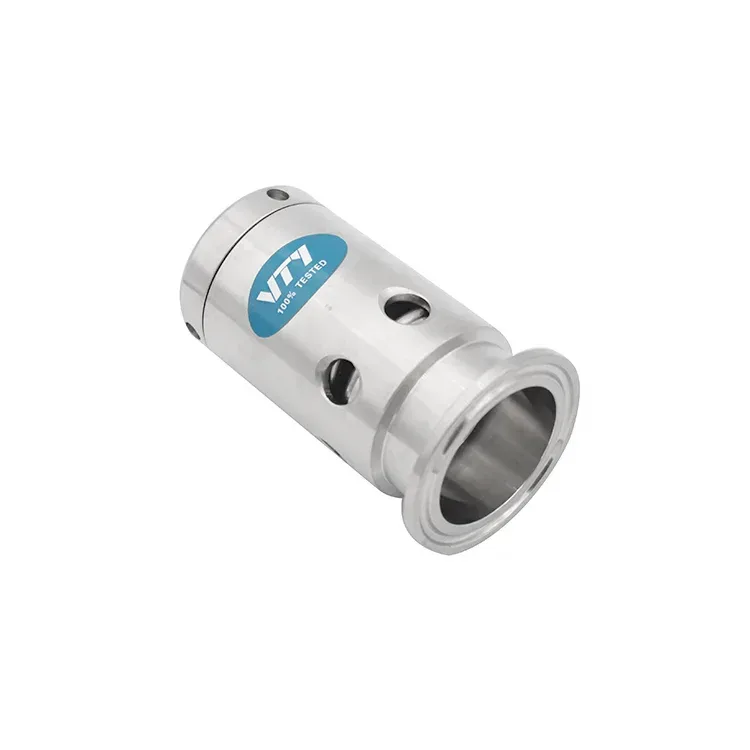
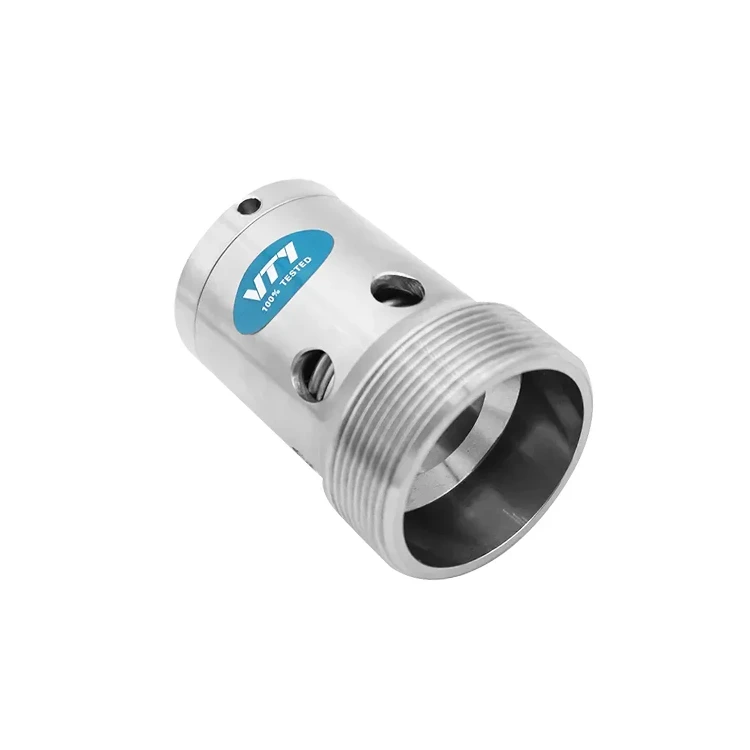
The Pressure Vacuum Valve or PVV Valve from VTY, is a tank protection device that protects tanks against excessive internal pressure and dangerous vacuum during pressure and depression phases. Its robust and compact design allows quick and easy maintenance. The exhaust from these valves is not channeled.
They are critical components installed on cargo and storage tanks, especially aboard chemical and product tankers. These valves are designed to maintain tank integrity by automatically relieving over-pressure or vacuum conditions caused by temperature changes, cargo loading or unloading, and other operational variables.
Installed on the tank’s vent line, the valve operates by opening and closing at predefined set points to maintain tank conditions within safe limits.
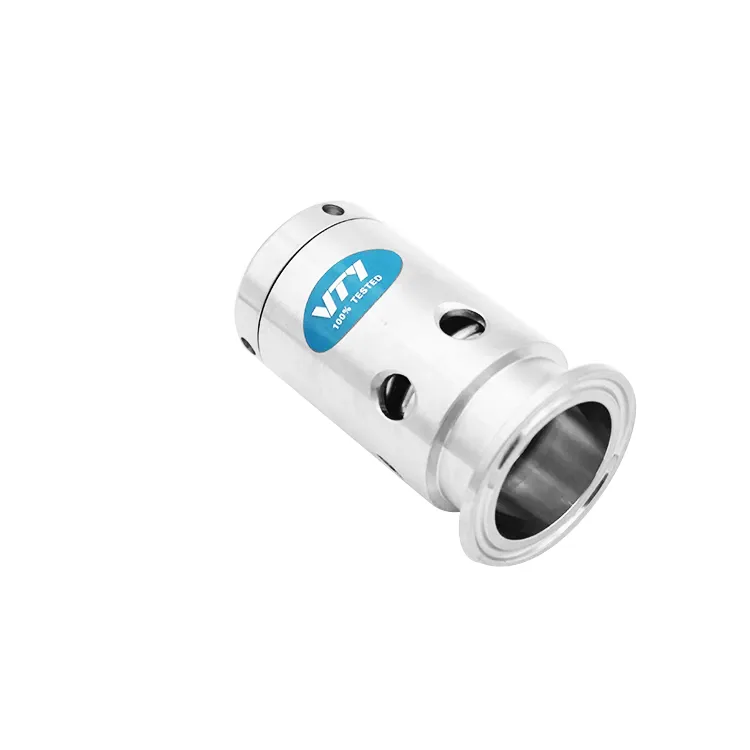
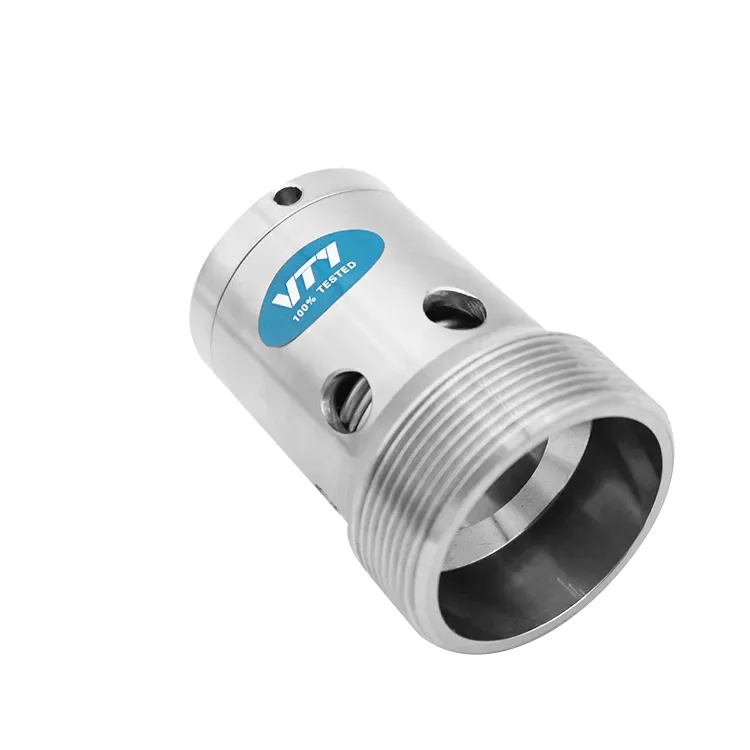
|
Material grade |
Product contact parts |
304L/316L (1.4307/1.4404) |
|
|
Non-product contact parts |
304 (1.4301) |
||
|
Provide EN 10304 3.1B Certificate |
|||
|
Seal Material |
Standard |
EPDM |
|
|
Option |
FPM, Silicone, PTFE, NBR |
||
|
All seal materials comply with FDA 177.2600 |
|||
|
Temperature Range |
-20°C~+135°C (EPDM) |
||
|
Pressure |
Pressure |
0.5~2.0 bar |
|
|
Vacuum |
0.3~0.9 bar |
||
|
Roughness |
Internal Surface |
Ra≤0.8μm |
|
|
External Surface |
Ra≤1.6μm |
||
|
Connection |
Connection Method: Clamp |
||
It provides dual-action safety for enclosed storage or fermentation tanks. It protects the vessel from structural failure by automatically venting excess gas if internal pressure rises too high (preventing an explosion/bursting) and pulling outside air in if a vacuum forms (preventing an implosion/collapse).
They should be inspected at least once every 3 to 6 months.
A "dead-zone free" design is crucial because processing vapors can easily trap moisture and organic residue in small crevices, creating breeding grounds for bacteria. By utilizing precision-molded gaskets and smooth stainless steel internals, the valve eliminates these hidden pockets to ensure strict hygiene and product safety.
The valve's internal paths must use AISI 316L stainless steel to withstand corrosive process vapors and sanitizing chemicals, while external components can use standard AISI 304 stainless steel.
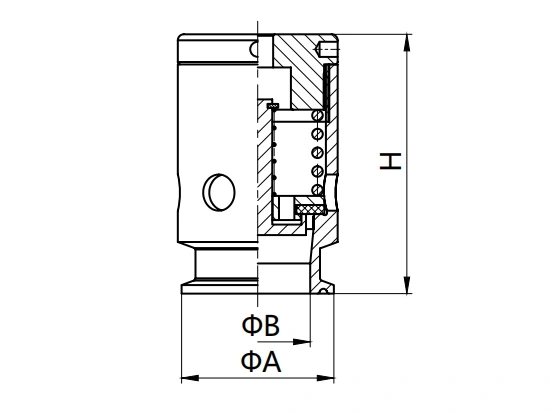
| Size | A | B | H |
|---|---|---|---|
| 1" | 50.5 | 22.1 | 84.3 |
| 11/4" | 50.5 | 28.45 | 86 |
| 11/2" | 50.5 | 34.80 | 86 |
| 2" | 64.0 | 47.50 | 86 |
| 21/2" | 77.5 | 80.0 | 86 |
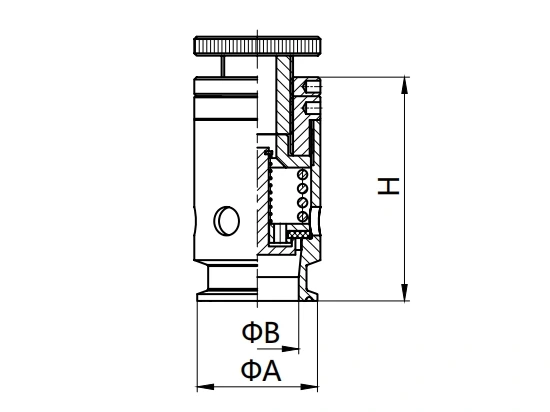
| Size | A | C | E |
|---|---|---|---|
| 11/2" | 50.5 | 34.80 | 94 |
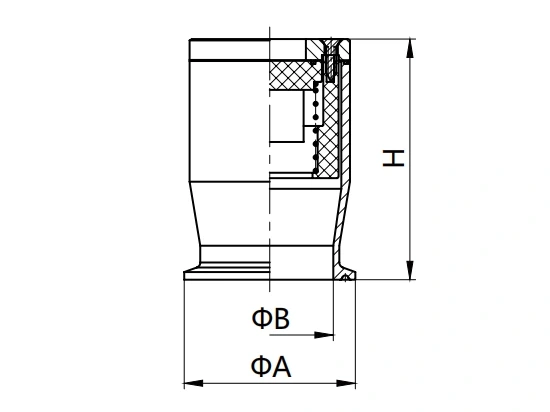
| Size | A | B | H |
|---|---|---|---|
| 11/2" | 50.5 | 34.80 | 93 |
| 2" | 64.0 | 47.50 | 90 |
Address
No.729, Road 3, Binhai Industrial Zone, Wenzhou, Zhejiang, China
Tel